
Every time a driver takes their eyes off the road, even for a few seconds, the risk isn’t theoretical. It’s immediate.
According to the National Highway Traffic Safety Administration, distracted driving was linked to 3,275 deaths and 324,819 injuries in 2023. That’s nearly nine lives lost and close to 900 people injured every single day. In total, distraction contributes to roughly 8% of all traffic fatalities in the U.S.
And those numbers likely understate the problem. Many forms of distracted driving go unreported, largely because drivers are reluctant to admit what pulled their attention away in the first place.
What distracted driving actually looks like
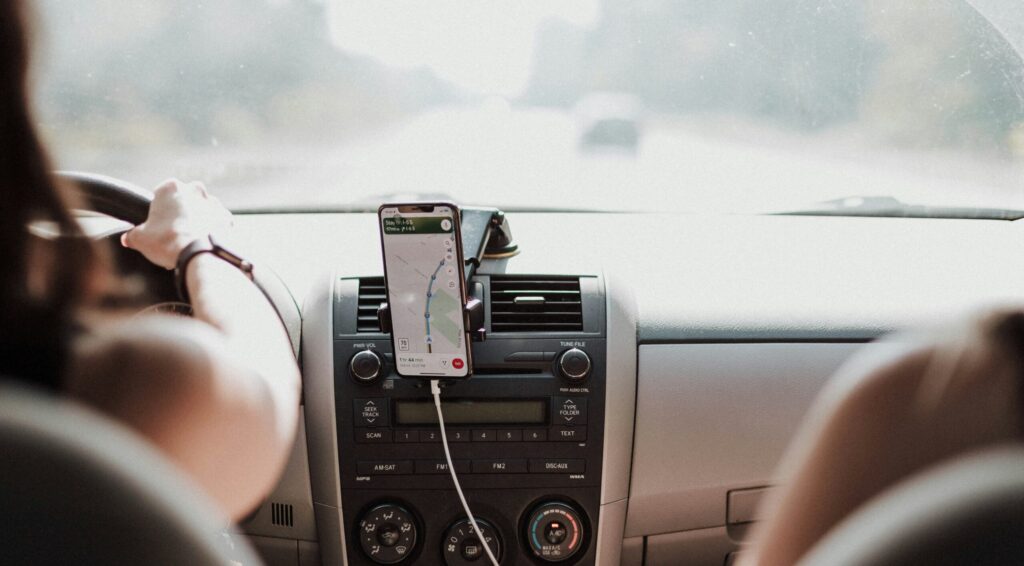
Distraction behind the wheel shows up in small, everyday moments: a quick glance at your phone, checking directions, changing radio stations, or reaching for something in the passenger seat. These behaviors may feel routine, even harmless, but each creates a gap between what’s happening on the road and what a driver can actually see and process.
Texting is often the example people go to first, and for good reason. The National Highway Traffic Safety Administration reports that reading or sending a text takes your eyes off the road for about five seconds. At highway speeds, that’s roughly the length of a football field with your eyes off the road.
The data makes the risk clear. Additional research from the Virginia Tech Transportation Institute found that texting can increase crash risk by more than 20 times compared to attentive driving. And what’s worse — more than half of drivers admit they’ve done it.
Where distracted driving and school bus safety intersect
For most drivers, a moment of distraction might feel inconsequential. For a child getting on or off a school bus, it can be anything but.
When a school bus stops, everything around it shifts — traffic is expected to stop, students may be crossing, and drivers must recognize and respond in real time. That only works if attention is fully on the road. That’s where even a brief lapse of attention can have real consequences.
That kind of lapse is happening far more often than most people realize. Each year, the National Association of State Directors of Pupil Transportation Services conducts a national survey to better understand how frequently drivers illegally pass stopped school buses. The latest results from the 2024 – 2025 school year make the scope clear:
- 218,000 +illegal school bus passings in a single day
- Nearly 40 million projected violations across the full school year
Across the country, this plays out day after day while school is in session, putting students at risk in moments that are entirely preventable. Distraction isn’t the only factor behind these incidents, but it plays an undeniable role. When attention shifts away from the road, even briefly, drivers are far more likely to miss the signals that require them to stop.
“There are a lot of [drivers] who are distracted out there, on their phones, heads in the clouds,” our Chief Growth Officer Steve Randazzo told USA Today. “Look, we know kids are going to be kids. They are going to be silly and they trust the bus to keep them safe. The onus is on us as adults to be careful. It’s just not worth it if you cannot sit still for 30 seconds or a minute while kids get on or off a bus.”
A quick refresher: what the law requires when a school bus is stopped
School bus laws can vary by state and roadway, but the expectation is consistent everywhere: when a school bus stops, drivers are required to stop. Here’s what that looks like in practice:
- Flashing yellow lights: Slow down and prepare to stop. The bus is about to pick up or drop off students.
- Flashing red lights and stop-arm extended: Come to a complete stop and remain stopped.
- Do not move again until the bus begins moving and students have reached a safe place off the roadway.
There are nuances in how laws are written and enforced depending on where you live. But those nuances don’t change responsibility. When a school bus is stopped with red lights flashing, drivers should treat it as a full stop, not a judgment call. No exceptions for being in a hurry, and no room for distraction.
What drivers can do right now
Preventing distracted driving doesn’t require new technology or new laws. It starts with small, deliberate choices. While it may seem obvious, the following checklist can help set you and the young drivers in your life up for success:
- Silence notifications or use “Do Not Disturb” before driving
- Set navigation and music ahead of time
- Keep your focus on the road, even when using hands-free features
- Pull over if something needs your attention
- Set a positive example for younger drivers
Distracted Driving Awareness Month is a reminder that attention behind the wheel has real consequences. Paying attention goes beyond avoiding tickets or crashes. It’s about recognizing situations that require full focus, especially when students are stepping on or off the bus.
“Motorists and parents must commit to a culture of safety, specifically by not calling or texting family members when they are known to be driving,” urges Kristin Poland, Ph.D. the Acting Director of Highway Safety for National Transportation Safety Board at the 2025 National School Bus Safety Summit.
When a school bus stops, a child is relying on every driver nearby to see it and respond. Slow down, stay alert, and stop when it matters.